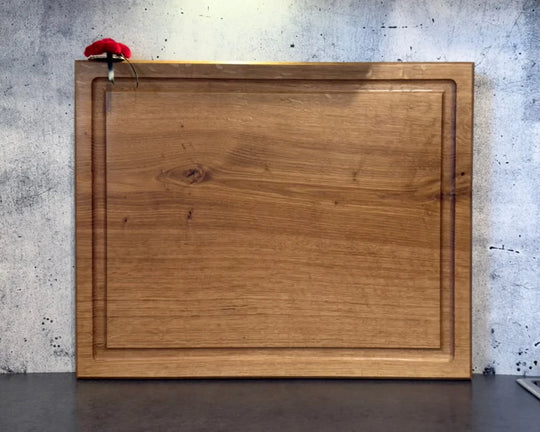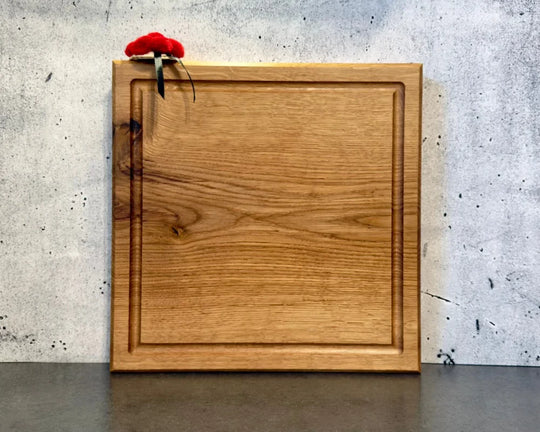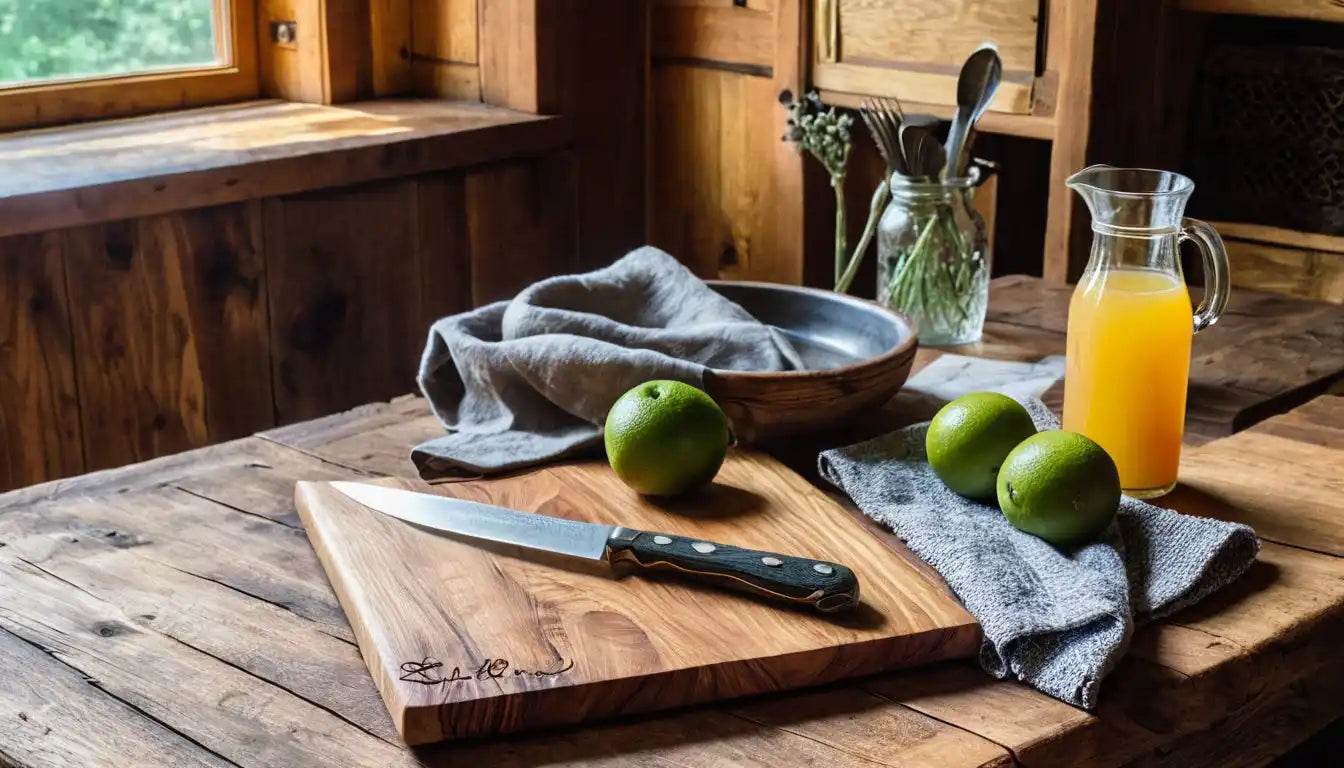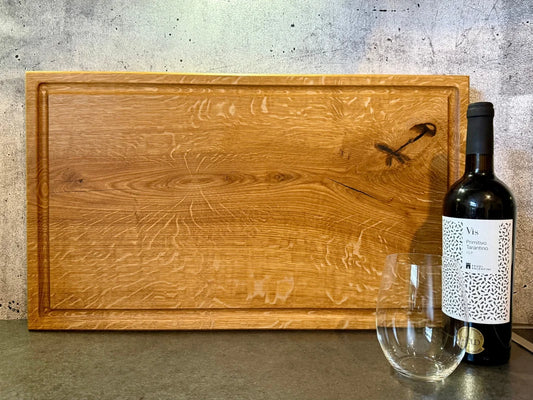


Sustainability doesn't begin with the food we buy, but with the tools we use every day. A sustainable wooden cutting board represents durability, naturalness, and conscious consumption – and is the antithesis of disposable goods. At wood & more, all boards are made from solid European wood – without compromise, without plastic, and with meticulous handcraftsmanship.
Go directly to our sustainable wood products:
• Executive Board Collection
• Pitmaster Boards
• CustomBoard – Your board made to measure
• Care products & accessories
1) Wood – the most honest material in the kitchen
Wood is the epitome of sustainability: a renewable resource, durable, repairable, and chemical-free. Each board is unique with its own grain, gaining character over time instead of appearing worn. A sustainably produced wooden board often lasts for decades – unlike plastic boards, which are replaced after just a few years.
2) Regional production & short delivery routes
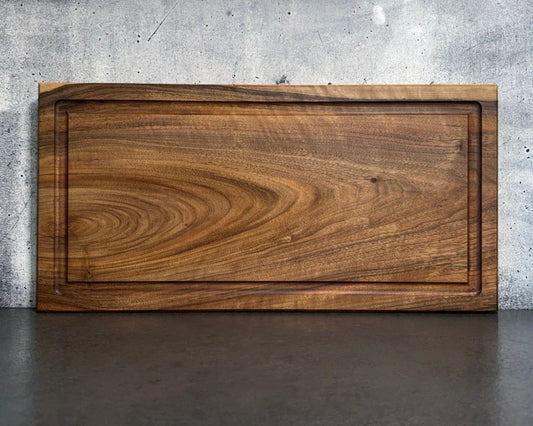
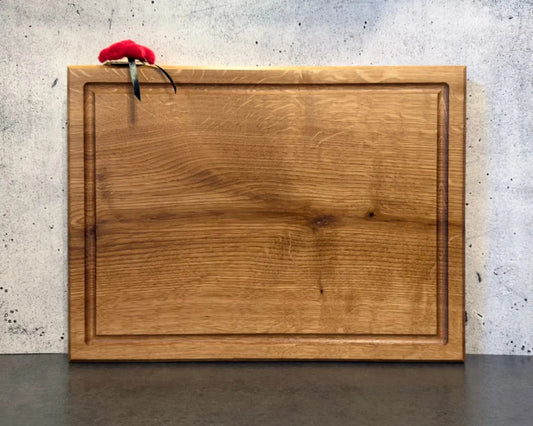
Our boards are made from European solid wood – oak, ash, walnut, elm, and maple. The wood comes from sustainable forestry that uses resources responsibly. Production takes place in small workshops in Europe, and the boards are finished, stored, and shipped directly from wood & more in Germany. This allows us to avoid unnecessary transport, large-scale imports, and overproduction.
3) Longevity is the best form of sustainability
A durable cutting board is an investment in quality, not quantity. Solid wood can be cared for, oiled, and even sanded for many years – all without waste or energy consumption. This significantly reduces the ecological footprint of each individual board.
- Oiled instead of lacquered – breathable, natural, food-safe.
- Care with linseed oil – no solvents, no microplastics.
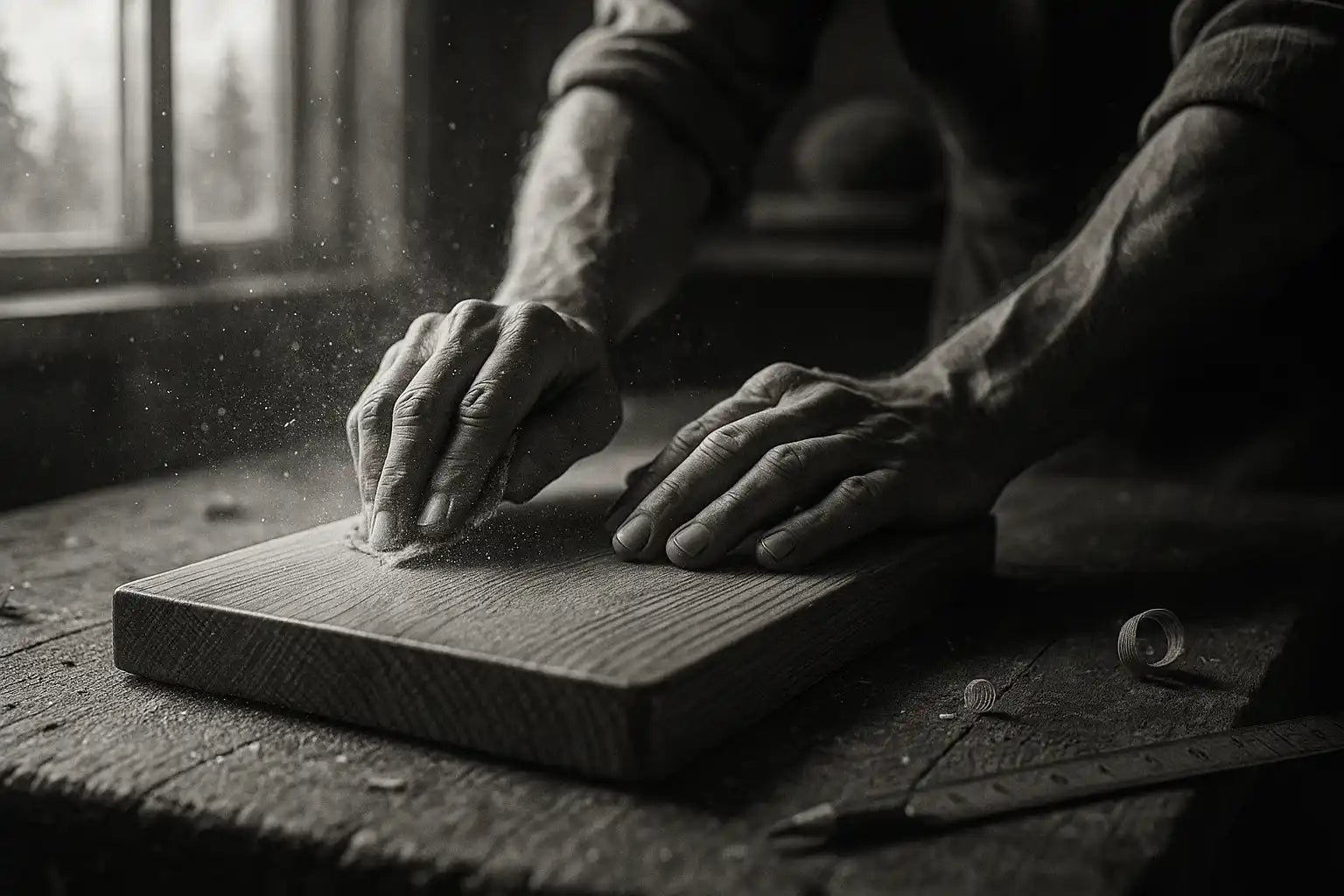
- Can be sanded down if necessary – repair instead of replacing.
You can find care products here: Care & Accessories
4) Sustainability through handcraft
Each board is inspected, oiled, and packaged by hand. No mass production, no rushed processes, just honest craftsmanship. The result: sustainable cutting boards that impress with their natural surface, stability, and feel.
Our philosophy: less, but better. Anyone who buys a board from wood & more consciously chooses against cheap goods – and for a product that lasts for decades.
5) Wood types & responsibility – no tropical wood, no compromise
We exclusively use European woods of clearly traceable origin. Oak and walnut are particularly durable, while ash and maple stand out for their elasticity and light appearance. Each type of wood is selected sustainably and sourced regionally – without interfering with endangered ecosystems.
6) Sustainability doesn't stop at packaging.
We avoid plastic packaging and use cardboard boxes made from recycled material instead. Our boards arrive unbleached, minimally packaged, and securely padded – as little material as necessary, as much protection as makes sense.
7) Sustainability through individuality
Another aspect of our responsibility lies in conscious production. Thanks to our CustomBoard manufacturing, each board is only produced upon request – no mass production, no surplus. Individual engravings or custom sizes make each board a unique, sustainable companion.
8) Conclusion – Sustainability you can feel
A sustainable wooden cutting board combines design, function, and responsibility. It stands for lasting quality and craftsmanship that endures for generations. Wood is not a trend – it's a statement of conscious enjoyment and genuine value.
Recommended sustainable boards at wood & more:
Executive Board Oak & Ash | Pitmaster Boards | Premium Walnut Board | CustomBoard – Custom-made products
FAQ – Frequently Asked Questions about Sustainable Cutting Boards
What makes a cutting board sustainable?
Sustainability means longevity, natural materials, and regional production. A solid wood board can be cared for, repaired, and used for many years.
Why is wood more sustainable than plastic?
Wood is a renewable resource, biodegradable, and free of chemicals. Plastic boards scratch more easily, release microplastics, and need to be replaced regularly.
Which types of wood are particularly sustainable?
Oak, ash, and walnut come from controlled European forestry. They are durable, robust, and ideally suited for cutting boards.
How do you properly care for sustainable wooden boards?
Regularly rub in natural linseed oil or care oil, let it soak in briefly, and wipe off. This preserves the surface, protection, and shine – completely without chemicals.
How long does a wooden cutting board last?
With proper care, a solid wood board will last for many years, often decades – that's sustainability in action.